

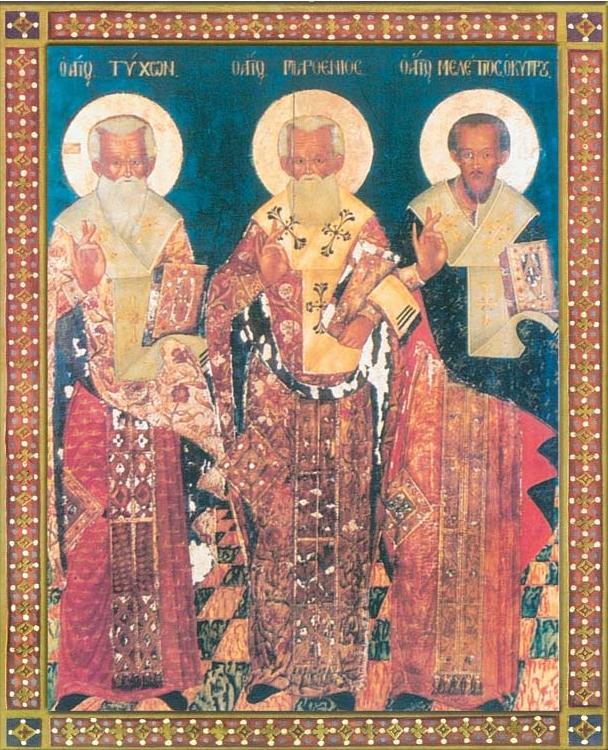
 SAINT PARTHENIUS, BISHOP OF LAMPSACUS
Saint Parthenius was the son of a deacon from the town of Melitopolis. As a child he remembered well the words of the Gospel and endeavored to fulfill them. He settled in the area of a lake where he fished. He then sold the fish and distributed the money to the poor. By God’s Providence he was chosen as bishop of Lampsacus. He cleansed the town of paganism, closed the idolatrous temples, built many churches and strengthened the faithful in the Faith. Through prayer, he healed every manner of illness and he was particularly powerful over evil spirits. On one occasion when he wanted to cast out an evil spirit from an insane man, the evil spirit begged him not to do so. Parthenius said to him: “I will give you another man into whom you can enter and in him, you can dwell.” The evil spirit asked him: “Who is this man?” “I am that man,” replied the saint, “enter and dwell in me!” Upon hearing this, the evil spirit fled as though burned by fire crying out: “How can I enter into the house of God!” St. Parthenius lived a long time and through his work manifested an abundant love for God and man. Parthenius entered into the eternal rest of Christ in the fourth century.
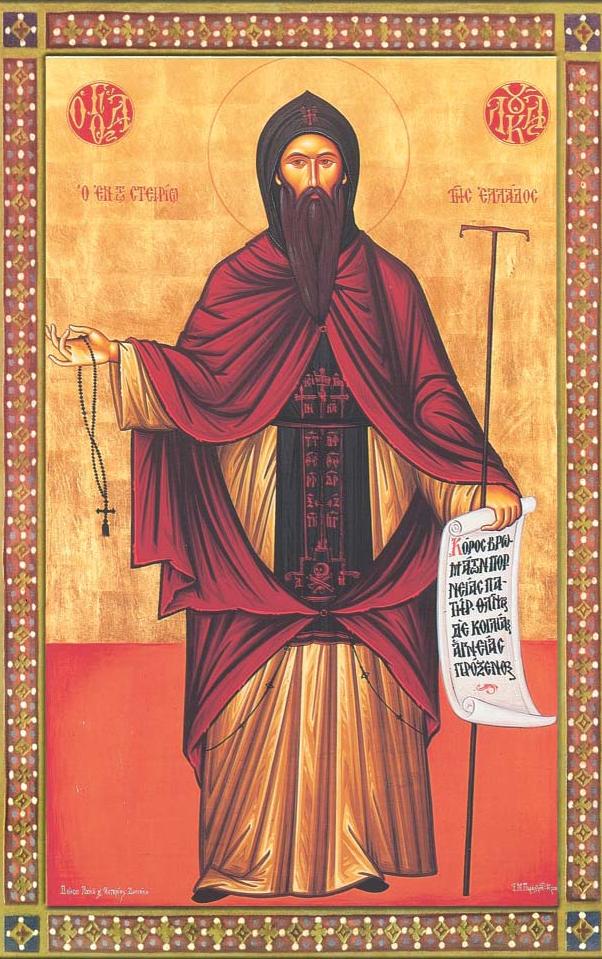 THE VENERABLE LUKE OF HELLAS
Saint Luke was born in Castorion (Delfi) and died c. 946. Saint Luke is known to the Greek Church as Luke the Wonderworker. His parents were farmers or peasant proprietors on the island of Aegina, but were forced off their land by attacking Saracens. They settled in Thessaly, Greece. Luke was the third of the seven children of Stephen and Euphrosyne. Although Luke was a pious and obedient boy generally, he often made them angry because of his charity to those poorer than himself. In childhood he often gave his meal away to the hungry, or would strip off his clothes for a beggar. When sowing seed, for instance, Luke the Wonderworker spread at least half of it over the fields of the poor instead of over his parents’ fields. Later it was said that one of wonders God worked on Luke’s behalf was to make his parents’ crops yield more than anyone else’s, even though he had given away half the seeds. But at the time his mother and father were extremely angry. After Stephen’s death, Luke left the fields and gave himself for a time to contemplation. When he told his family that he wanted to enter a monastery, they tried to stop him. But Luke ran away. Unfortunately, some soldiers caught him and for a time put him in prison, thinking he was a runaway slave. When he said that he was a servant of Christ and had undertaken the journey out of devotion, they refused to believe him. He was shut up in prison and cruelly treated until his identity was discovered. He was allowed to return home where he was scolded for running away. In the end, however, Luke got his way. Euphrosyne provided hospitality to two monks on their way between Rome and the Holy Land. They managed to persuade his mother to let him accompany them as far as Athens. There Luke was admitted as a novice in a monastery, but he didn’t stay long. One day the superior sent for him and told the young saint that Luke’s mother had appeared to him in a vision and that, as she needed him, he must return home to help her. Luke went home once again and was received with joy and surprise. After four months Euphrosyne herself became convinced of her son’s calling and no longer opposed his entering religious life. So, age the age of 18, he built himself a hermitage on Mount Joannitsa near Corinth and lived there happily for the rest of his life. Luke is one of the earliest saints to be seen levitating in prayer. He worked so many miracles there that the site was turned into an oratory after his death and became known as Soterion or Sterion (place of healing) and he himself as the Thaumaturgus (the wonder-worker)
THE VENERABLE MASTRIDIA
Saint Mastridia lived in Jerusalem where she led an austere life of asceticism. A certain young man fell in love with her and began to annoy her. In order to save herself and this young man from sin, Mastridia took a small basket of moistened berries and retreated into the wilderness. She spent seventeen years in the wilderness and during the entire time, by the power of God, neither did she lace berries, which she brought, nor did her clothing wear out. Mastridia died peacefully about the year 580 A.D.
THE ONE-THOUSAND THREE MARTYRS AT NICOMEDIA
They all suffered from Christ during the reign of Emperor Diocletian.