

 THE HOLY MARTYR BASILISCUS
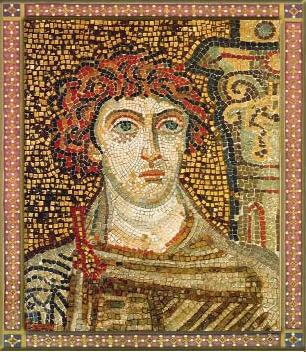
Basiliscus was a kinsman of St. Theodore Tiro. He was tortured together with Eutropius and Cleonicus. When the latter two [Eutropius and Cleonicus] were crucified, and expired (March 3), then Basiliscus was again returned to prison. At that time, there occurred a change in the emperor’s deputy so that Basiliscus remained imprisoned for a long time. With tears, Basiliscus prayed that God not deprive him of a martyr’s death. After lengthy prayers, the Lord Jesus Himself appeared to him, promised to fulfill his wish and sent him to his village to bid farewell to his mother and brothers. At that time Agrippa, a new deputy, was appointed and ordered that Basiliscus he brought from the village immediately. Enroute from the village to the town of Amasea the Lord, through His martyr, worked a great miracle and, as a result, many people believed in Christ. Agrippa ordered the martyr to offer a sacrifice to the idol Apollyon. Basiliscus said: “Apollyon means `one who kills – the destroyer,’ ” and with fervent prayer turned the idol into dust and with a heavenly fire burned the temple. The frightened Agrippa attributed this to magic and ordered Basiliscus beheaded. At that moment, Agrippa went insane and, in his madness, went to the scaffold, found a little blood of the martyr in the dust, placed it under his belt and he was healed. Coming to his senses he was baptized. Later on, Marinus, a citizen of Comana, the place of the execution of Basiliscus, built a church over the relics of the saint where many afflicted people found healing.
 THE HOLY MARTYR JOHN VLADIMIR, KING OF SERBIA
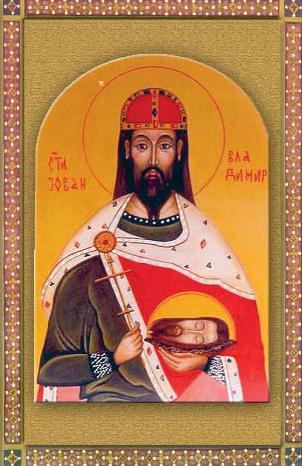
John Vladimir was of princely lineage from Zahumlje. His grandfather was called Hvalimir and his father Petrislav. As a ruler, he was wise, merciful, meek, chaste and brave. He fervently prayed to God and voluntarily built churches and supported them. However, he had difficult struggles both internally and externally. Internally, from heretics and the Bogomils and externally from Tsar Samuel and Tsar Basil who wanted to conquer him. Samuel deceitfully captured him and cast him into prison. While he languished in prison an angel of God appeared to him and foretold that he would shortly be freed, but that he would die a martyr’s death. Getting to know him better, Samuel grew to like him and gave his daughter Kosara to be his wife. When Samuel died, his son Radomir was crowned Tsar. But Vladislav, his twin brother, slew Radomir and deceitfully summoned Vladimir and beheaded him in the year 1015 A.D. The relics of this saintly king repose uncorrupt in his monastery near Elbasan and over his relics, throughout the ages and even today, numerous miracles occur. In 1925, a church was built to honor this crowned martyr adjacent to the monastery of St. Nahum since John Vladimir was the benefactor of this glorious monastery.
THE SECOND ECUMENICAL COUNCIL
This Council was called during the reign of Emperor Theodosius the Great in Constantinople in the year 381 A.D. Its goal was to confirm the Orthodox teaching concerning the Holy Spirit about Whom the Patriarch Macedonius of Constantinople erroneously taught. He erroneously taught that the Holy Spirit is God’s creature and not a divine person [Hypostasis] equal to the Father and Son and One in essence with Them in the Holy Trinity. Macedonius was condemned by this Council and the teaching about the Holy Spirit was added to the Nicaean Symbol of Faith [the Nicene Creed].
THE HOLY RIGHTEOUS MELCHISEDEK, KING OF SALEM
Melchisedek was a contemporary of our forefather Abraham. According to the words of the Apostle Paul he was a king, priest and proto-type of the Lord Jesus Christ (Hebrews 7).